On writing, erotica, character, soul stealers, philosophies, sensualities, and inspirations. And How To, if I can.
-- www.Neale-Sourna.com, www.PIE-Percept.com, http://www.ProjectKeanu.com, www.AuthorsDen.com/nealesourna, www.CafeShops.com/NealeSourna, & www.Writing-Naked.com, www.CuntSinger.com
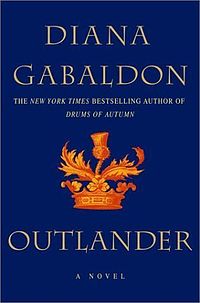
http://www.dianagabaldon.com/2014/03/26-years-ago-today/ I get the occasional question as to how I came to write OUTLANDER,
and given that today is the 26th anniversary of my doing so, thought I’d
maybe post this explanatory message—which I wrote a few years ago in
thanks to the Compuserve folk who Witnessed the Creation , now updated. Dear All– On March 6, 1988, I started writing a novel. I wasn’t going to tell
anyone what I was doing, let alone ever try to publish it. I just wanted
to learn how to write a novel, and had concluded—having written All
Kinds of nonfiction at that point—that the only way to do that was
actually to write one. (I was not, btw, wrong in this assumption.) Now, as a (rather convoluted) side-effect of my day-job, I’d become
an “expert” in scientific computation (really easy to be an expert, if
there are only six people in the world who do what you do, and that was
my position, back in the early ’80′s), and as an even weirder
side-effect of that, I became a member of the Compuserve Books and
Writers Community (then called the Literary Forum), somewhere in late
1986. Well, when I decided to learn to write a novel by writing one, I also decided a few other things: 1) I wouldn’t tell anyone what I was doing. Aside from the feeling of
sheer effrontery involved in doing so, I didn’t want a lot of people
telling me their opinions of what I should be doing, before I’d had a
chance to figure things out for myself (as I said, I’d written a lot of
non-fiction to this point, and nobody told me how). Also didn’t want a
lot of busybodies (in my personal life) putting in their two cents,
asking when I’d be done, and when it would be published, etc.—since I
had no idea whether I could even finish a book. 2) I would finish the book. No matter how bad I thought it was, I
wouldn’t just stop and abandon the effort. I needed to know what it
took, in terms of daily discipline, mental commitment, etc. to write
something like a novel. (I had written long things before—a 400-page
doctoral dissertation entitled “Nest Site Selection in the Pinyon Jay,
Gymnorhinus cyanocephalus,” (or, as my husband says, “Why birds build
nests where they do, and who cares anyway?”), an 800-page monograph on
“The Dietary Habits of the Birds of the Colorado River Valley,” etc.—but
I’d never written fiction, other than lame short stories for English
classes.) And 3) I’d do the absolute best that I could with the writing, every day.
Even though this was a practice book that I’d never show anybody, it
didn’t matter. If I wasn’t trying my best, how would I ever know if I
was any good, and more importantly, how would I get better? (In this regard, I had some evidence to go on. I’ve read all my
life—hugely—and noticed that in most cases, while I’d enjoy all of an
author’s books, including the first one, the books got noticeably better
as the writer kept on writing. So, I concluded, with perfect logic,
writing was like ballet dancing or piano-playing; if you practiced, you
got better at it. I was not wrong in this conclusion, either.) So, anyway, the book I wrote for practice was OUTLANDER, and here we are, 26 years and (almost) 14 books later. I just wanted to acknowledge the role of the Forum and my friends there, in that process. How did that work, since I’d decided not to tell anybody what I was
doing? Well, I stuck to that decision (I didn’t even tell my husband),
but about six months into the writing, I was logging on intermittently
late at night, picking up messages and posting replies—and found that I
was having a argument with a gentleman (named Bill Garland, RIP) about
what it feels like to be pregnant. “Oh, I know what that feels like,” Bill assured me. “My wife’s had
three children!” [pause here to allow the ladies to roll on the floor
for a moment] “Yeah, right,” I said. “_I’ve_ had three children, buster.” So he asked me to describe what that was like. Rather than try to cram such a description into a thirty-line message
slot (all we had back in the old 300-baud dial-up days), I said, “Tell
you what—I have this…piece…in which a young woman tells her brother what
it’s like to be pregnant. I’ll put it in the data library for you.” So—with trembling hands and pounding heart—I posted a small chunk
(three or four pages, as I recall) of the book I was calling CROSS
STITCH. And people liked it. They commented on it. They wanted to see
more! Aside from a few private moments associated with my husband and the
birth of my children, this was the most ecstatic experience I’d ever
had. And so, still trembling every time I posted something, I—very
slowly—began to put up more. Now, I don’t write with an outline, and I don’t write in a straight
line, so my chunks weren’t chapters, weren’t contiguous, and generally
weren’t connected to anything else.
But they did have the same
characters –and people liked those characters. There were (and are) a lot of very kind and encouraging people who
inhabited the Forum—some of them still there: Alex, Janet, Margaret,
Marte… and many who aren’t, like Karen Pershing and John Kruszka (RIP),
Mac Beckett, Michael Lee West–and Jerry O’Neill, whom I count as my
First Fan and head cheerleader; always there to read what I posted and
say the most wonderful things about it, one of the kindest people I’ve
ever known. So, over the course of the next year or so, these people kept egging me on.
Asking questions, making comments*, urging me—eventually—to try to
publish This Thing (it started out as a perfectly straight-forward
historical novel, but then Things Happened, and what with the
time-travel and the Loch Ness monster and all, I had no idea what it
was). *(Just to clarify—these were not critiques, just interested comments.
I’ve never had a critique group nor ever would; nothing against them at
all—I just don’t work that way. But regardless, I’d never put up
_anything_ for public viewing that I didn’t think was completely ready
for human consumption.) Some of these people were published authors themselves and very
kindly shared their own stories, and advice regarding literary agents
and the publishing process (thank you, Mike Resnick, and Judy
McNaught!), and in the fullness of time, John Stith very kindly
introduced me to his own agent—who took me on, on the basis of an
unfinished first novel.
And…I finished it, to the supportive cheers of
the Forum. A couple of weeks later, my agent sold it, as part of a
three-book contract, to Delacorte, and bing!—I was a novelist. Not saying I’d never have written a book without y’all—but man, you guys _helped_.
Thank you! –Diana
==== I avoided this book until its siren’s call said, Really, just read a
few pages, then buy me and read me in full. Did, and have been in love
ever since.
There’s more to how she did it. Search online about Jamie Fraser and his inspiration and connection to Doctor Who.
Tri-C student films have screened in film festivals throughout northeast Ohio and graduates have established successful careers within the local and national film and video production industry. Tri-C is proud to present the following student films for production this spring.
“Becca Gets Her Sea Legs”
It is 1688 in Stuart England, at war’s end, and out to troubled, deep seas, in what should be a romantic tryst, a general’s runaway bride, noblewoman Becca is utterly seasick, in Irish pirate Aidan’s ceaselessly moving ship.
S E Reynolds (dba Neale Sourna) is a Tri-C student directing an online promotional book trailer for her novel (working title BECCA THE BUCCANEERESS). www.romantic4ever.com/romantic-fiction/index.html
As a student film all compensation for performers and crew members is being waived.
“Marshmallows and Fire”
An eccentric grandfather with a flare for story telling is asked to chaperone his grandsons’ sleep over, which he views as a grand opportunity to tell one or two of his over the top, not so accurate tall tales. His daughter who is very concerned with the not so accurate aspect of her father's stories makes him promise not to tell any. But with the help of his equally eccentric friends and the demands of his captive audience of children he finds away to tell the story while keeping his promise.
Robb Scott is a student filmmaker working on his thesis film, a short film entitled "Marshmallows and Fire." This is a short student film that will be shown in film festivals, and online on Vimeo.com. This is an unpaid opportunity. Cast will receive a copy of the complete film for their reels and an IMDB credit.
Auditions for both the films are Saturday Jan 25th 9 am - 6 pm on the Metropolitan Campus MLA 101 located at 2900 Community College Ave and E. 30th St. Cleveland, OH 44115.
Please allow 45 minutes to an hour and a half for your audition. Call backs may be scheduled later the same day.
To read character descriptions and to schedule an audition for the student films listed above please complete the audition request form by clicking here:
Simone Barros Adjunct Faculty, Media Arts and Studies & Journalism and Mass Communications P. 216.987.4333 ext. 1097 | simone.barros@tri-c.edu Cuyahoga Community College | Where Futures Begin
They're cracking down on ALL titles of adult fiction subgenres and descriptions. As if, like when standing on the street, when you search you just avert your eyes and move on quickly when coming upon something that freaks you out. It's not clearly illegal.
Amazon and many others, including Smashwords now, I read, have reneged on the contracts of content they've been selling for years, one of mine for a decade, and now decide to make you change a title they just made you change a month ago. Spastic much for a handful of complaints?
Author Virginia Wade's fiction debut follows a group of women who embark
on a week-long camping trip to Mt. Hood National Forest. There, in the
shadow of Oregon’s highest mountain, they are kidnapped and sexually
assaulted by a mysterious woodland creature. "What the hell is that
thing?" asks one protagonist.
“‘It's f---ing Bigfoot,’ hissed Shelly. ‘He's real, for f---'s sake.’ Horror filled her eyes. ‘With a huge c---.’”
The book, with the decidedly un-PG title "Cum For Bigfoot," is just the first of 16 fiction ebooks
that Wade (a pen name) has written about the legendary beast sometimes
known as Sasquatch, each detailing a series of graphic and often violent
sexual encounters between the apelike creature and his female human
lovers.
Wade has made an exceptional living writing these stories.
Virginia Wade's bigfoot erotica has been downloaded more than 100,000 times.
It began in December of 2011. A stay-at-home mother from
Parker, Colo., Wade had no ambition to be a published author and no real
writing experience other than a few attempts at historical romance in
the mid-90s.
But then, she says, "I got this crazy idea for a story." So
she sat down and wrote the entire book — more of a novella, at just
12,000 words — in a matter of weeks.
She never even considered trying to
sell it to a mainstream publisher. Instead, she went directly to
Amazon's Kindle Direct Publishing, an online platform for self-publishing with a 70% royalty rate for authors. (The average royalty percentage for authors with mainstream publishers is between 8 and 15%.)
"Cum For Bigfoot" wasn't an overnight best-seller. "The
first month, I think I made $5," Wade admits. But over the course of
2012, the book was downloaded well over 100,000 times. "And that was
just Amazon," she says. "That's not counting iTunes or Barnes & Noble
or any of the other places that sell self-published books."
With no
marketing muscle, no bookstore tours or print reviews or any of the
publicity that most top authors use to sell books, she started bringing
in staggering profits. During her best months, she says, she netted
$30,000 or more. At worst, she'd bank around six grand — "nothing to
complain about," she says.
She branched into other genres, penning ebooks like "Taken By Pirates" and "Seduced By The Dark Lord,"
but her "Cum For Bigfoot" series was the biggest money-maker. "I
started cranking them out," she says. "If there was a market there for
monster sex, I was gonna give it to them." She even brought in her
family to help with the workload.
"My dad, who's an English instructor,
was my editor," Wade says. "My mom did the German translations" —
including the equally popular "Komm für Bigfoot." "I even had my own
401k. It became a cottage industry."
The prose wouldn't win any fiction awards (a sample line:
"From within the tufts of matted hair, the creature released a huge pale
c--- that defied logic"), but her readers loved it, and their numbers
seemed to be growing every day. "I was putting my daughter through
college with the profits," Wade says. "I used to joke with her, 'Bigfoot
smut is paying for your school.'"
Courtesy of Virginia Wade
Author Virginia Wade enlisted her family's help to meet the demand for her work.
Wade
is hardly the only author who has made a mint writing about monsters
and the women who love them (or at least submit to their sexual
appetites). She's part of a burgeoning literary genre that's found a
wide audience online: monster porn, otherwise known as “cryptozoological
erotica,” or as some of the authors prefer to call it, "erotic horror."
Their self-published books feature mythical creatures of every possible
variety, from minotaurs to mermen, cthulhus to leprechauns,
extraterrestrials to cyclops, who become involved in sexual trysts,
often non-consensual, with human lovers.
A feline shapeshifter
might be saved from a tree by a firefighter with a cat fetish (as in the
ebook "Out on a Limb"), or a buxom cattle rancher might be abducted and kept enslaved "in a strange, perverted alien zoo" ("Milked by the Aliens").
It's easy to snicker, but somebody is buying these things.
Authors of monster porn may not be notching sales to rival E.L. James or
Amanda Hocking, the trailblazers of self-published erotica, but they're
making more than enough to survive. That’s especially remarkable given
the low price tag on many of their books.
"For those listed at $2.99 and over, I can claim 70 percent in royalty
payments. But I didn't feel comfortable nor right in asking someone to
pay $2.99 for a five-to seven-thousand-word short story." So instead,
the majority of her titles are listed at 99 cents, the minimum allowed
by Amazon.
"Even with the small prices that I was asking," she says, "it doesn't
take much imagination to guess that I was selling a lot of books to earn
$4,000 each month."
Then everything changed.
Attack of the Pitchfork Brigade
In October, the online news site The Kernel published an incendiary story called "An Epidemic of Filth," claiming that online bookstores like Amazon, Barnes & Noble,
WHSmith, and others were selling self-published ebooks that featured
"rape fantasies, incest porn and graphic descriptions of bestiality and
child abuse."
The story ignited a media firestorm in the U.K, with major
news outlets like the Daily Mail, The Guardian, and the BBC reporting
on the “sales of sick ebooks.”
Some U.K.-based ebook retailers responded with public apologies, and
WHSmith went so far as to shut down its website altogether, releasing a
statement saying that it would reopen "once all self-published eBooks
have been removed and we are totally sure that there are no offending
titles available."
The response in the U.S. was somewhat more muted, but
most of the retailers mentioned in the piece, including Amazon and Barnes & Noble,
began quietly pulling hundreds of titles from their online shelves — an
event Kobo coo Michael Tamblyn referred to last month as "erotica-gate."
The title pretty much says it all.
The crackdown was meant to target the obvious offenders — ebooks like "Daddy’s Birthday Gang Bang"
and others that fetishized incest and rape — but in their fervor to
course-correct, the online bookstores started deleting, according to The Digital Reader blog,
"not just the questionable erotica but [also].... any e-books that
might even hint at violating cultural norms." That included crypto-porn.
Wade’s sexy Sasquatch, not unlike the elusive hominid beast of legend,
vanished without a trace.
But it wasn’t just Bigfoot who was herded into extinction. Wade says that 60% of her titles disappeared from Amazon
and other online bookstores. "They started sending my books randomly
back to draft mode" — where new ebooks are uploaded and edited before
going on sale — "and I'd get an email from them saying, 'We found the
following books in violation of our content guidelines,'” she recalls.
“But they wouldn't tell me why. There were no specifics. It was a huge
guessing game trying to figure out what the issue was."
She altered the titles of several volumes in her blockbuster series, from "Cum For Bigfoot" to "Moan For Bigfoot," and they were returned to Amazon's
shelves, but now they're only seen by readers searching for them
specifically. "They can still be found in the store," Wade says, "but it
requires extra digging."
Even more confusing, only some of her titles
were flagged by Amazon, so while some books are listed as "Moan For Bigfoot," others remain "Cum For Bigfoot."
Mike Nudelman/Business Insider
There are plenty of fish in the sea.
Burkhardt had a similar experience. "Amazon has been systematically banning just about every
book I have listed with them," she says. As with Wade, she was told her
books had violated content guidelines. "The guidelines are very vague,"
she says.
"Reading them implies any and all erotic pornography is
prohibited, so I'm left to wonder exactly what erotica is allowed."
[NS_And once accepted, under their contract, they come back and ... change the rules of acceptance.]
"Taken By the Monsters 4," which Burkhardt first published with Amazon
in July of 2012, disappeared from the site just a few weeks ago. "After
16 months, they have determined that it either no longer meets their
guidelines or they didn't really look it over to begin with and just now
caught it," she says.
Beauty and the Beast
Amazon
declined to comment for this article. Its content guidelines state that
the company doesn't accept “offensive depictions of graphic sexual
acts." But works that contain precisely that, from de Sade's "Justine" and Pauline Réage's "The Story of O" to the recently released French bestseller "The Victoria System" by Éric Reinhardt (which contains the memorable line "My erection beat time in my underwear") are readily available.
To explain the policy, the site offers this unhelpful bit
of advice: "What we deem offensive is probably about what you would
expect." Vague as that may be, Amazon
is within its legal rights to stock whatever books it chooses.
"Bookstores are private enterprises, and are thus not required to sell
every book that people ask them to sell," says Eugene Volokh, a
professor of law at UCLA who specializes in First Amendment cases.
"There is no law of which I’m aware that would require bookstores to
sell a book that they disapprove of, whether or not we might think their
judgments of disapproval are sound." Amazon
makes the same point elsewhere in the content guidelines, when it
notes, "We reserve the right to make judgments about whether content is
appropriate and to choose not to offer it."
[NS_even to breaking their contract with books they've sold for a ten year period or have just a month before asked the publisher / author to "correct" a month before.]
The ancient Greeks would approve.
Burkhardt, who lives in Northern Virginia and writes as a
hobby — she claims her day job is working as a personal protection
specialist for a foreign ambassador — continued emailing Amazon with questions, and soon learned that the main objection was to her book's listing descriptions, which anybody pursuing the Amazon
website could read.
They were too graphic, she was told, and
potentially offensive. Burkhardt wanted to compromise, but she worried
that a less detailed description would cause more trouble in the long
run.
"I want readers to know exactly what they are buying when they make
a purchase," she says, "and not be surprised and offended later because
I couldn't say the book contains explicit sex with monsters.”
Her concern isn’t unjustified. One can only imagine a "Fifty Shades of Grey" fan happening upon Burkhardt’s ebook "Taken by the Monsters,"
and their horror upon reading about the vicious gang-rape of a woman by
hirsute “humanoid” creatures in an abandoned building, which ends with
them “filling her womb deep with [their] monster seed.” A little
spanking this isn’t.
Author Emerald Ice
(a pen name) — who lives in southern Illinois with her husband, a
Catholic high school teacher — is less concerned about offending Amazon browsers than being overlooked by potential paying customers. The first three books in her Alien Sex Slave Series — "Alien Love Slave," "The Sex Arena," and "Alien Sex Cove"— were runaway hits, she says. At least until Amazon
pulled them from distribution and requested changes, once again citing
content guidelines. That's how "Alien Sex Slave" became "Sidney's Alien Escapades."
[NS_Like a bad parent or quietly belligerent teacher, saying something is wrong with it but we won't say what, and after you've "fixed" it, we'll ask you to do so again. Leaving you in a neurotic wasteland of of WTF? What is the list of words, what are the situations? We are businesspeople trying to sell our legal products in a manner we know people who read these search. What the...? Can I say What, or The?]
"I hate it," she admits of the new title. "I came up with it because I
was in a panic about the books disappearing." Her sales have since
plummeted, and she isn't surprised. "If I was a reader searching for hot
alien sex books, I wouldn't look twice at something called 'Sidney's
Alien Escapades.'"
Monster erotica is often purchased in series form.
Alice Xavier (also a pen name) had her first experience with censorship when her ebook "Serpent God’s Virgin," originally published last April, was pulled from Amazon in mid-October. "They flagged it because it had virgin in the title," she guesses, because after she renamed it "Serpent God's Maiden," it again appeared on sale.
"Amazon didn't care that the plot involves sex with a giant snake deity," she says.
"Ultimately, Amazon is amoral. They don't care either way that they're selling dirty,
filthy erotica. Their main goal is to keep their customers happy. They
have plenty of customers who get righteously outraged and complain,
complain, complain. And Amazon has way more at stake than just books. So they want to keep everybody happy, understandably."
Even so, she and other monster-sex authors are more than a
little unsettled by the recent purge, which lumps their work in with
ebooks depicting rape, incest and bestiality — unfairly they insist. The
latter label is especially dangerous, says Xavier, who authored books
like "Cuckwolfed" and "At the Mercy of the Boar God."
Although she considers bestiality "an egregious act of animal cruelty
when it occurs in real life," she's not so sure it should be off-limits
to writers. "If writers want to write about it, that's great for them,
because plenty of people love reading about it." Then again, that
doesn’t mean she wants to be in any way associated with the genre. "It's
a media ....storm waiting to happen,” she says. “It's massively taboo —
more so than incest, I think. It has the potential to be incredibly
damaging to the whole image of erotic literature.”
Wild Kingdom
Is crypto-smut the same thing as bestiality lit? It may
seem like a fine distinction to the uninitiated, but for many authors,
it’s crucial. "Is a werewolf an animal? What about a minotaur?” asks
Mark Coker, the founder and CEO of Smashwords—one
of the few ebook self-publishing platforms that didn't clean house in
October. “Where do you draw the line?
Sex with beasts is a common theme
in paranormal romance. Do dinosaurs need to be a protected class of
animal? What about a Sasquatch? When are they real, when are they not,
when can you have sex with them and when can you not?"
Mike Nudelman/Business Insider
Satyrs are such notoriously passionate creatures, there's a whole disorder named for them.
And
even in the cases when the creature is an animal (a giant squid, for
instance) Xavier insists that the power dynamic is critical. “How can
you commit animal cruelty when the monster is in control, is consenting,
and is an intelligent being?” she points out. In the world of fantasy, a
creature can be classified as a person, she says, even if it's not a
human person. “A barnyard animal is just an animal without the power of
consent.”
Modern crypto-porn has more in common with the myths of
ancient Greece, many of which feature gods taking animal form — Zeus was
famous for this move — and having their way with humans. “Just because
he turns into a swan doesn't mean he's turned into an ordinary animal,”
Xavier points out. “He's still a god with his godly powers and
intelligence, just in the form of a swan.”
Smashwords, which gives authors 85% of net profit,
regardless of their work’s length, had its own issues with censorship
last February, when PayPal threatened to deactivate the ebookstore's
account if it didn't cease selling, according to a PayPal statement,
"erotic fiction that contains bestiality, rape and incest." [NS_without ever considering that there may be consent or ... a lesson or morality or of personality hidden within the sexual tale.]
Although Smashwords initially complied, especially with
regard to incest and sex involving underage characters, Coker was never
comfortable with PayPal's other objections. "Dubious consent is a really
big theme in mainstream romance," he says. "Where do you draw the
lines? In mainstream romance, the woman may not want to have sex, and
the man forces himself on her, and later in the book they're smiling and
happy.
Look at Gone With the Wind, where Rhett is hauling
Scarlett up the stairway and she's yelling 'No, no, no!' To what extent
can financial institutions regulate what people are allowed to imagine
in the safety of their own mind?"
PayPal and Smashwords reached a truce
in mid-March. “PayPal's worst fear was always that their payment
systems would be used for illegal underage erotica and illegal underage
pornography,” says Coker. “Once they learned of our prohibition against
such content … they gained the confidence they needed to lift the
proposed restrictions.”
Everyone's after his lusty charms?
The initial purge of erotica on Amazon
may have passed, but according to several authors, their monster sex
ebooks continue to disappear from virtual shelves on a regular basis.
Given her initial success, Burkhardt says, "I was seriously considering
quitting my job and taking up writing full time. I'm glad I decided to
wait and see, because after Amazon started banning some of my titles, my sales dropped dramatically."
Her monthly profits from Amazon
went from over $2,000 in early 2013 to just $400 last month. "I can't
really complain," she concedes. "It's still a great supplemental
income. But I can't help but wonder how much I would be making if I was
allowed to publish with Amazon some of the stories they have since blocked or banned."
Some of the genre's authors would like to give up on Amazon
entirely, furious at the way they've been treated. But it's difficult
to walk away from the world's largest online retailer, even if you're
confident that you've got something readers want.
"There is a growing
audience for this type of literature," says Burkhardt. "And I wish Amazon
could see that." [NS_Why not put the naughty titles in a special search area. They do sell video porn. You have to be able to read and imagine to get through erotic fiction.]
Of course, authors could sell exclusively with
Smashwords, which offers mostly unlimited creative freedom and a better
cut of the profits. But the platform doesn’t have nearly the reach.
"Amazon is the big dog," says Emerald Ice. "They're well known, their
books are easy to download. It's easy, and consumers want easy. Heck, I
want easy. Smashwords is still kind of underground."
Another option is following the path forged by E.L. James,
who started out writing "Twilight" fan-fiction under the pen name
Snowqueens Icedragon before landing a major publisher and going on to
earn something in the neighborhood of $95 million. But as Emerald Ice
learned, even with a track record of sales, books about monster sex are
hard to place with an established imprint.
"Nobody wants to touch the
taboo risqué alien books," she says.
"They're just too out-there, I
guess. I tried a few publishers, and it was the fastest rejection I ever
got in my life. Within two days, it was 'Thank you, no, no, this isn't
what we're looking for! Please get this off my computer!'"
We attempted to contact several publishers, asking if
they'd ever been offered monster erotica. None of them responded.
Literary agent Steven Axelrod, who represents Amanda Hocking — an author who made close to $2 million with her self-published paranormal romances, including "Hollowland" and "My Blood Approves" — says
he has "absolutely no knowledge of 'horror erotica.'"
A representative
from Valerie Hoskins Associates in London, the literary agency that reps
E.L. James, was apparently so opposed to being included in a story
about the genre that they responded to requests for comment with "We
know nothing about self publishing or erotica." (You read it here first:
"Fifty Shades of Grey" has absolutely nothing to do with self-publishing or erotica.)
Judging a Book by Its Cover
Mike Nudelman/Business Insider
Erotic ebooks often feature close encounters with alien species.
Xavier, who when not writing smut works as a user-interface designer, has taken a different tack. Rather than argue with Amazon over content guidelines, she's looked for ways to make her books less of a target. "At its core, Amazon
is trying to clean up the presentation," she says. "I think that's a
good thing, because it keeps all the erotica online and for sale."
Ebooks featuring incest and rape tend to share a singular
defining feature: sexually explicit and poorly produced covers. The way
for monster erotica to survive, she thinks, is to "dress it up like
fantasy." No more trashy illustrations. "My covers are pretty classy,"
she says. [NS_They block and cut these, too.]
"It's all a facade, of course. My plots are depraved. They're
definitely not for kids or grandmothers. But I put it in a glossy
package, so it doesn't offend anybody who's just searching through
Amazon.”
Her book "Alien Seed" is a perfect example of this strategy. The cover looks like any mainstream
romance novel, with the image of a reclining and scantily-clad model
bathed in green light. But the image doesn’t even hint at the content
(sample: “I was either in some ridiculous ... dream or aboard an alien
spaceship full of robotic tools capable of delivering epic orgasms”).
[NS_Which can be misrepresentation in sales. Which can be more offensive and actually illegal.]
"If you want to be a major player in this field,” Xavier adds, “you need to act like one.”
Many monster porn authors employ pen names. [NS_Most romance and erotica writers do.]
Virginia Wade has a different plan. "Writing monster erotica has become a hostile work environment,"
she says. "I'm tired of the BS. It's just easier to write in a
different genre and avoid the scrutiny." She hasn't written a monster
sex ebook in months, and has instead focused her creative energies on
books that don't involve hirsute creatures or kidnapped campers. Even if
censorship weren’t an issue, she's not sure if she has the inspiration
for another sequel.
"I don't know where to go from here," she says with a
sigh. "Each book was like another episode of a soap opera. I've already
used the love triangle plotline. I've used the amnesia plotline. I've
used the heroine-gives-birth-to-the-wrong-baby plotline,
where the kid she had with Bigfoot turned out to be white instead of a
little baby ape. I don't know where else I can take the Bigfoot fantasy.
I'm out of crazy. I think I might be done."
She pauses, considering. "Well maybe one
more," she concedes. "I have to finish up the series somehow. Give it a
proper grand finale." She owes it to her longtime fans. Maybe something
with genetically engineered Sasquatches, she thinks. Or just drop an
A-bomb on Bigfoot and his love slaves and move on.
Fans of raunchy Bigfoot sex need not
fear. Over the last few months, several self-published ebooks involving a
certain hirsute sex machine have appeared in Amazon's Kindle store,
with titles like "Boffing Bigfoot," "Savage Love," and the newly released "Bigfoot Did Me From Behind And I Liked It."
"There's a lot of human heads being pulled
off, eating human flesh and EXPLICIT SEX between Bigfoot and JESSICA,"
raved one five-star reviewer of the latter title. "Overall a funny
read."
Eric Spitznagel is a frequent contributor to Esquire, Playboy, Men's Health, Rolling Stone and the New York Times Magazine, among others. He lives in Chicago with his wife and son. Visit him at ericspitznagel.com.
Disclosure: Jeff Bezos is an investor in Business Insider through his personal investment company Bezos Expeditions.
The Doctor Who doodle started life as a request from a huge fan at
Google. It seemed daunting- 11 Doctor's, 50 years of adventures,
countless enemies and time travel!
But we loved the idea of science fiction, technology and fun coming
together, so we set about creating a multiple level game.
The game was
always a simple premise- those dastardly Daleks have stolen the Google
letters and we need Doctor Who to retrieve them.
Artists don't make games, programmers do. I provided the designs and
various pieces of animation but without the engineers the game would
only exist in another dimension! I was fortunate to work alongside
people that genuinely cared:
Engineering Gurus - Rui Lopes, Corrie Scalisi. Mark Ivey
Additional support - Doug Simpkinson, Jonathan Shneier
All things D of 3 - Leon Hong
Deity of rain, lava & lightning - Kevin Laughlin
Additional game ideas - Gregory Capuano
Sounds - The BBC, Tom Tabanao, Manuel Clement and Cody!
Creative consultant - Chris Dibona
User testing - Jennifer Zamora
We thank the BBC for trusting us and also helping us whenever needed. So
what are you waiting for?! Jump in your TARDIS (Time and relative
"doodle" in space) and become the fastest time lord in the universe!
Viewers gather for a screening of Bravo's Work of Art at Soda Bar in Prospect Heights, Brooklyn.
Photo courtesy Brooklyn Museum/Flickr via Creative Commons
Earlier this fall, when the Twitter-powered juggernaut Scandalpremiered
its third season, the show’s devoted fans had no shortage of venues for
taking in the next chapter in the lives of Olivia Pope and her team of
political fix-it “gladiators.”
They could watch in the privacy of their
own homes, of course, or they could take their fandom public: Barsacross the country hosted viewing parties for the occasion. In Washington, D.C.—the backdrop for Scandal—one such event, as described by Damon Young on the blog Very Smart Brothas,took
on gala-like proportions, featuring a red carpet, a doorman, and
parting gifts (which, for its overwhelmingly female crowd that evening,
included lotion and gift certificates for a massage).
Not every live-viewing event was quite as fancy as that one—but they
were all part of a new tradition of communal viewing centered around TV
series. Not long ago, the only reason to seek out a bar or restaurant
with a TV was to catch “the game.”
(Note this Times piece
on the encroachment of television sets into New York City bars: though
from just four years ago, it only considers televised sports to be the
culprit.)
When televised events other than sports did warrant communal
viewing, they were usually once-a-year offerings, like the Academy
Awards, or season finales of major shows like Lost.
Lately, however, bars have been encouraging weekly communal viewing of everything from Game of Thrones toMad Men. The move has coincided with the rise in “prestige” television series, especially those, like Breaking Bad,
which traffic in dramatic tension, surprise, and catharsis, all of
which can be fun—or therapeutic—to share with others.
And there are
other benefits to such experiences: For a TV consumer of certain tastes,
being cable-less (as more and more
people are) isn’t necessarily a hindrance. In New York City, for
example, even a relatively omnivorous TV-watcher can find watering holes
where she can take in her favorite programs, from True Bloodto The Walking Deadto Ru Paul’s Drag Race.
There’s also the opportunity to rub shoulders with your fellow fans. I
recently experienced my first communal viewing of a TV series episode
in a public space—the show was Breaking Bad(specifically, the explosive “To’hajiilee”
episode); the venue was a moderately-sized pub in Brooklyn. By the time
the episode began, the bar was standing room only, with probably about
150 people packed in.
Prior to arriving, I had been concerned that I
would have to contend with a large group of distractible patrons who
would in turn distract me with their chatter, or worse, those obnoxious
viewers who throw in their two cents after every turning point. But the
atmosphere was astonishingly quiet, save for the TVs blaring Walter
White’s furiously unraveling saga.
A couple of times during the course
of the hour, some uninformed would-be patron would blunder into the bar
looking to grab a mere drink, jabbering away to a friend all the while.
But these interlopers were shushed and shamed by the Breaking Bad fans, exiting as quickly as they had come.
It was a highly enjoyable experience, one that felt unashamedly
cult-ish and satisfying—collective cheers and audible gasps were shared
during the incredible Mexican standoff that ended the episode.
Overhearing other patrons banter during commercial breaks about their
affinity for “Team Walt,” “Team Jesse,” or “Team Hank” was the superior,
real-life version of reading an endless stream of live-tweets espousing
the same characters.
After that night, I knew exactly where I’d be
checking out the series finale.
Of course, I had to camp out at the bar
three hours early to ensure that my friends and I got good seats for
“Felina”—which is one reason hosting these parties must appeal to bar
owners.
(When I called ahead just to be sure they’d be airing the
finale, the employee on the other end happily replied, “Yes we are.
We’ve aired it every Sunday for the last couple of seasons! We’ll see
you then!” He seemed just as excited about the finale as he was about
all the business he’d be getting that evening.)
But the wait was a small
price to pay for sharing a piece of television history with a room full
of true Jesse Pinkman fans.
Of course, communal viewing isn’t limited to public spaces.
Scandal has
inspired at least a couple of my friends to host weekly viewing parties
at their own homes. The television industry itself has sought to
further audience participation, no doubt to boost ratings during initial
airings: ABC’s got the perfect themed recipes for your upcoming Scandal viewing; the Academy of Television Arts & Sciences has tips for hosting parties year-round; AMC lays out how to “throw the swankiest Mad Men bash on your block!”
Even Martha Stewart has advice on how to coordinate the perfect “fall viewing party.”
(“Make sure your sofa is stocked with blankets and pillows.”)
For those
who don’t wish to be limited to the tastes of the masses (maybe you and
your friends love watching It’s Always Sunny in Philadelphia
together), this is a happy alternative. It also fosters a more intimate
experience while still remaining communal—you’re surrounded by friends
or acquaintances, and audible reactions, even the occasional bon mot,
are more welcome, and often encouraged.
At a viewing party for the
recent premiere of VH1’s TLC biopic at a friend’s apartment, homemade cocktails and hors d’oeuvres flowed, as did chuckles and quips.
In the past decade or so, TV watching has in some ways become a more
solitary act: Thanks to the DVR, to Netflix, and to the proliferation of
tablets and smartphones, we’re able to watch what we want, when we
want, with little need to accommodate friends or family’s viewing
habits.
Maybe that’s why collective viewing holds appeal: It offers a
chance to bring back some of the old camaraderie, and simultaneity, of
the TV-watching experience. We may be more disconnected
from our own TV sets and cable boxes than ever before—but the desire to
connect with others through our shared pop cultural affections remains.
There’s nothing quite like bonding with a complete stranger over your
hatred for Breaking Bad’s Todd Alquist.
And as fun as it is to watch Scandal
on a second screen, even the snarkiest tweet is a poor substitute for
the real, live, exasperated groans brought on by Olivia and Fitz’s toxic relationship.
Janet Jackson’s Album “Rhythm Nation” is actually called “Janet Jackson’s Rhythm Nation 1814.” As you can see on the album cover, Janet is wearing the number 1814 on her hat, pendant on her shirt and on her earring. What is the meaning behind 1814???
The first meaning of “1814″ is that R (Rhythm) is the 18th letter in
the alphabet and N (Nation) is the 14th. Hence 1814. The second
meaning is pretty awesome as Janet explained,
“White writing Rhythm Nation, I was kidding around
saying, “God you guys, I feel like this could be the national anthem for
the 90′s…Just by a crazy chance we decided to look up when Francis Scott Key wrote the national anthem and it was September 14, 1814.”
Janet Jackson’s Rhythm Nation 1814 was released on September 19, 1989, the same week but 175 years after Scott wrote “The Star Spangled Banner”.
rhythm nation 1814, rhythm, nation, 1814, janet jackson, means, meaning
For many years Black historians and Afrocentrists have said that the first inhabitants of China were black Africans.
The Negroid races peopled at some time all the South of India,
Indo-China and China. The South of Indo-China actually has now pure
Negritos as the Semangs and mixed as the Malays and the Sakais." ( H. Imbert, "Les Negritos de la Chine").
“Even the sacred Manchu dynasty shows this Negro strain. The lower
part of the face of the Emperor Pu-yi of Manchukuo, direct descendant of
the Manchu rulers of China, is most distinctly Negroid. Chinese
chroniclers report that a Negro Empire existed in the South of China at
the dawn of that country's history. ( Professor Chang Hsing-Lang , "The importation of Negro Slaves to China under the Tang Dynasty A.D. 618-907)
“There is evidence of substantial populations of Blacks in early
China. Archaeological studies have located a black substratum in the
earliest periods of Chinese history, and reports of major kingdom ruled
by Blacks are frequently in Chinese documents." (Kwang-Chih Chang, The Archaeology of Ancient China, (Yale University
Press) and Irwin Graham, Africans Abroad (Columbia University Press).
But after hundreds of years of the worldwide spread of the doctrine
of white superiority and the inferiority of black Africans and their
descendants. This notion was poo, pooed by white scientists and others
and even by some blacks.
But in 2005, a Chinese DNA specialist, Jin Li, leading a team of
Chinese and other scientists, proved through DNA tests that indeed the
first inhabitants of China were black Africans.
Li said he was trying to prove that the Chinese evolved from homo
erectus independently of all other humans. He collected DNA samples from
165 different ethnic groups and over 12000 samples in China and Asia to
test his theory.
Li said he was taught through China’s education system that there was
something special about Chinese. And because he was Chinese, he was
hoping to prove that the Chinese developed independently of all other
humans.
But surprise, surprise, surprise, surprise!
Li’s team focused on a single genetic marker that appeared about
80,000 years ago in Africa. Anyone carrying that marker would have
recent African ancestors and could not be descended from the more
ancient Homo Erectus.
Li and his team found that early humans belonged to different species
but modern humans descended from the East Africans species.
Li Hui, a scientist on Li’s team, said, that 100,000 years ago groups
of humans started leaving Africa moving through South and Southeast
Asia into China, and that 65 branches of the Chinese groups studied
carry similar DNA mutations as the people of Southeast Asia.
Jin Li said “we did not see even one single individual that could be
considered as a descendant of the homo erectus in China, rather,
everybody was a descendant of our ancestors from Africa."
Li was asked how he as a Chinese felt about what he found.
He said “after I saw the evidence generated in my laboratory. I think
we should all be happy with that. Because after all, modern humans from
different parts of the world are not so different from each other and
we are very close relatives.” (Amen Brother!)
Li’s team was composed of an international group of scientist from
China, Russia, India, Brazil and other nations. This was a 5 year
project to study the geographic and genealogical routes tracing the
spread and settlements of ancient and modern humans.
Now I know there are still many people and probably some of you
reading this hub who would be horrified, upset, disgusted, in disbelief
etc, etc, if you found that you had any genetic connection to a black
person.
And I can feel your pain, because at one time in American history, as
a result of all of the negative racial propaganda published about
blacks to justify slavery for 400 years. Many black people didn't want to be black either.
Right up until the civil rights movement, the "I'm black and I'm proud" and the "Black Is Beautiful" movements.
Many black Americans were happy to tout that they were part Indian.
part white or part any other ethnic group other than just being only
black.
Many black men and women straighten their hair and used skin lighting creams to make themselves look more white than black.
This is understandable, because all of the movies stars and other
esteemed images of Americans were white and mostly all of the images of
black Americans were ugly, buffoonish and how shall we say it,
aesthetically not pleasing.
But the DNA is the DNA and that shows that all modern human orginated in some part of the African continent.
Believe It Or Not
Or read em and weep
"If you get to the stage where you can persuade people on the
evidence, that it's solid, that we are all African, that color is
superficial, that stages of development of culture are all interactive,
then I think we have a chance of a world that will respond better to
global challenges." Richard Leaky, Paleoanthropologist
Vote On This Question
Do You Agree That Africans Were The Original Inhabitants Of China?
In Path of Exile,
we have an island-based culture called the Karui. They are founded on
the pre-European Maori and Samoan [Polynesian] cultures of the Pacific although their
technology level has been adjusted to put them on a par with the
Vikings of the 9th Century AD.
When conversing with other characters in the game, our Karui
player-character, the Marauder, understands and speaks 'Eternal', our
'common tongue (English) in Wraeclast.
But when our Marauder is alone or when he is speaking to another
Karui character like Maramoa Patua, a question presents itself. Why
aren't these characters speaking in their native tongue?
We've currently developed a few words in Karui...
Makanui means 'the way of the warrior'. Korangi means ‘he who wins wars with false promises’. makoru means shark. waikoama means canoe. Makanga means 'honoured warrior'.
...but dropping a few Karui words into otherwise English dialogue is a
piece of cake when compared to the task of creating full conversations
in Karui. Look at the process they went through to create Dothraki in Game of Thrones!
Iain Glen is quite right when he says that a performance will sound
'crap' if you don't go through this process. Without meaning, there's
no true emotion. An actor needs to understand what they are saying in order to produce a convincing performance.
So...to create Karui or not to create Karui...taka oma ngatua (that is the question).




 The first meaning of “1814″ is that R (Rhythm) is the 18th letter in
the alphabet and N (Nation) is the 14th. Hence 1814. The second
meaning is pretty awesome as Janet explained,
The first meaning of “1814″ is that R (Rhythm) is the 18th letter in
the alphabet and N (Nation) is the 14th. Hence 1814. The second
meaning is pretty awesome as Janet explained,
 Janet Jackson’s Rhythm Nation 1814 was released on September 19, 1989, the same week but 175 years after Scott wrote “The Star Spangled Banner”.


